Wednesday, October 31, 2007

Traveling Box


The contrast between the simplicity of the container and the deep transformation of urban form is remarkable. The Traveling Box ,an interdisciplinary conference being held November 8,9, and 10 at UC Santa Barbara, explores a wide range of the social, economic, and cultural impacts of containerization.

Tuesday, October 02, 2007

Norfolk's Light Rail


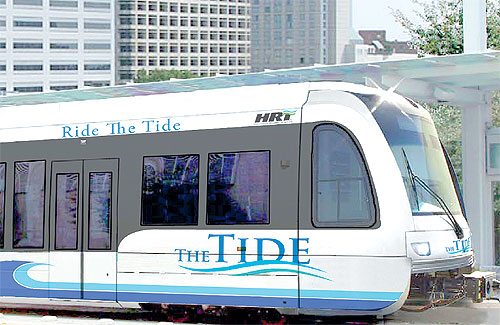
The Hampton Roads Pilot Online map of Norfolk's light rail uses Flash web technology to combine animation, maps, and passenger data, effectively illustrating the new light rail system that is now under development in Virginia. I especially like that people and buildings are included in the context of the technology.

Market, Mercado

Otavalo Market, Equador is one of many images they powerfully convey the connection among commerce, culture and food in the Flickr pool tagged Market, Mercado.

Saturday, September 29, 2007

Architectural Representations of the City in Science Fiction Cinema


Eric Mahleb's essay, Architectural Representations of the City in Science Fiction Cinema argues that despite 150 years of planning, little progress has been made in constructing cities that support improved living conditions. And today, we can't even do a very good job of imagining utopian cities.

Thursday, September 27, 2007

Written on the City

Written on the City organizes several hundred graffiti images organized by the city they appear in, from Amsterdam to Wolfville.

Mariachi Bands May or May Not Be Allowed on the Tram

Jul, an American expatriate now living in Switzerland, blogs about the complex cultural meanings encoded into a series of Zurich transportation signs.

Brand Avenue: The Indie City


Brand Avenue: The Indie City provides a short analysis of the factors--walkability and local ownership--that make Portland a center for music. When the density, diversity, and talent are combined, urban areas express creativity widely. A recent New York Times article, In Portland, a Golden Age of Dining and Drinking argues that,
This is a golden age of dining and drinking in a city that 15 years ago was about as cutting edge as a tomato in January. Every little neighborhood in this city of funky neighborhoods now seems to be exploding with restaurants, food shops and markets, all benefiting from a critical mass of passion, skill and experience, and all constructed according to the gospel of locally grown ingredients.

Friday, September 21, 2007

Mobility is cultural, not just functional


In a research article of importance to designers, user researchers and others interested in urban communication, UC Irvine professor Paul Dourish and Intel researchers Ken Anderson and Dawn Nafus argue most approaches to urban user research are too narrow:
While these applications clearly meet needs, they fail to take the urban environment on its own terms; they are based on the idea that urban life is inherently problematic, something to be overcome, in comparison to the conventional desktop computing scenario. Further, they fail to acknowledge the lived practice of urban life, and in particular its diversity and the different urban experiences of different groups. In focusing on abstracted rather than concrete behaviors, on individual consumption rather than collective sociality, and on the pairing between discretionary mobility and urban consumption, this approach paints a very partial view of urban living that leaves many people out of the picture.

Wednesday, September 19, 2007

David Byrne


David Byrne's creativity intersects with urban communication in a wide variety of ways. He is an avid biker and advocate of public participation in transportation policy making.

His Envisioning Emotional Epistemological Information installation in the Conde Nast Building is a provocative reworking of the communicative assumptions designed into Powerpoint.

And finally, in a more familiar guise, David Byrne Radio offers a new three hour mix of music each month, often organized around an unexpected theme--his mix is perhaps one of the most wide-ranging representation of urban culture in all of its global manifestations that I have encountered.

Urban Communication and Typography


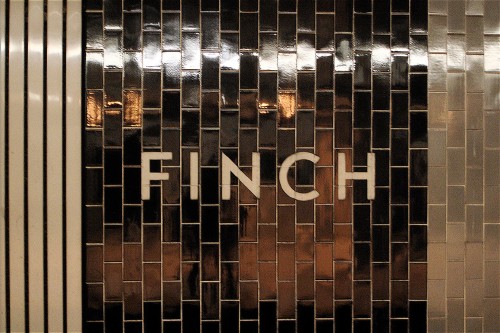
Joe Clark's presentation Inscribed in the living tile: Type in the Toronto subway is a tribute to the extensive history of the special developed Toronto Subway Typeface. His analysis of how attitudes of permanence, anonymity, and distinctiveness are expressed in the font becomes an analysis of the shifting relationship of the Toronto Subway to its fans, critics, and users.

Wednesday, September 12, 2007

Architecture of Authority


Richard Ross's recently published Architecture of Authority is an unflinching examination of
architectural spaces that exert power over the individuals within them. From a Montessori preschool to churches, mosques, and diverse civic spaces—a Swedish courtroom, the Iraqi National Assembly hall, the United Nations—the images in Architecture of Authority build to ever harsher manifestations of authority: an interrogation room at Guantánamo, segregation cells at Abu Ghraib, and finally, a capital punishment death chamber.

Learning from Pompeii


Carroll William Westfall's LEARNING FROM POMPEII provides an interesting contrast in thinking about the relationship between the built environment and patterns of social life. Even given the scant evidence which time has done so much to wear away, it is still possible to examine curb markings to envision the traffic flow of carts and people in important public spaces. Today, given the limitless traces and mappings of urban flows, we ought to be able to make sense of urban life to support design decisions for a salubrious, convivial community.

Tuesday, September 11, 2007

Motel Americana


Motel Americana provides a slice of the kind of life that was made obsolete with the coming of the interstate highway system and chain hotels. Organized by state, this web site offers a nostalgic glimpse of spaces of travel. These places were fixed in location, but their existence relied on a network of travelers. The iconography of these sites expressed a distinctive regional culture at the same time they made a claim on the larger American narratives of freedom, progress, and dynamism. May the peeling paint and burnt lightbulbs be a gentle reminder for us of the fleeting moment of significance we inhabit.

Wednesday, August 29, 2007

jake longstreth


The images produced by photographer Jake Longstreth are far too bleak to be categorized as nostalgic, yet these images are important, as they illustrate landscapes that frame a great deal of contemporary social life (I hesitate to use the phrase "support social life"). jake longstreth

Sunday, August 26, 2007

Amsterdam Bicycles


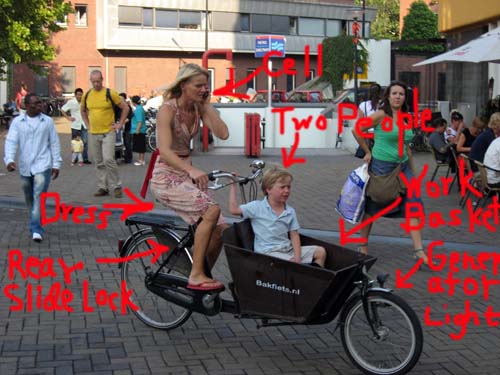
Brian Wilson created a thoughtful comparison of the differences between the bike cultures of Amsterdam and San Francisco. His analysis is enhanced by 82 original photographs contained in his post and numerous comments from others that extend and deepen his thinking. His mini-ethnography is a testament to the kind of power that cheap, convenient digital technologies like photography and blogging have for making sense of social experience.

Friday, August 24, 2007

Agora


Agora is the title of artist Magdalena Abakanowicz's permanent exhibition in Grant Park in Chicago and a fitting title for the 100th post to this urban communication blog. The public reaction to this work is mixed, but the work does provoke interaction and reaction. One measure of this reaction is the 424 images of the exhibit that have been uploaded to Flickr.

GOOD Magazine: A Love Song to Public Transit


In yet another form of urban communication, Good Magazine asked a singer to write a song to celebrate the pleasures of the Portland transit system. The song is performed on Youtube.

Tuesday, August 07, 2007

Walk Score


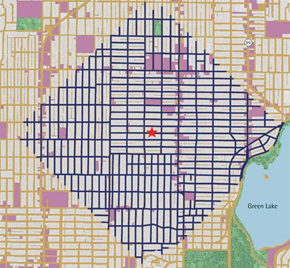
Urban form can enhance communication and community by creating dense networks of interesting places. How walkable is your neighborhood? Walk Score uses Google maps and a database of community resources to boil the walkability of an address into a single number. The information is also presented in a clean, useful interface.

Cool Globes


The City of Chicago is using art to expand the public dialogue and imagination surrounding the issue of global warming:
The exhibit features over 100 sculpted globes, each five feet in diameter, displayed along Chicago’s lakefront from The Field Museum north and at Navy Pier. Artists from around the world, including Jim Dine, Yair Engel, Tom Van Sant and Juame Plensa, designed the globes, using a variety of materials to transform their plain white sphere to create awareness and provoke discussion about potential solutions to global warming.

Saturday, August 04, 2007

Brutalized in Boston


Walt Lockley reinforces his passionate analysis of the Boston City Hall building's brutal consequences for public life with a set of appropriately harsh black and white photographs.