Thursday, January 31, 2008

Learning from Copenhagen


Since 1962, the city of Copenhagen has worked to improve the social life of the city. Now, after more than 40 years, the results of their planning process are clear--the city grows more vibrant, engaging and delightful each year.
Architect Jan Gehl, who has worked as a theorist, researcher, planner, designer and activist for decades, recently coauthored the book New City Spaces. The book details the kinds of urban designs that support public engagement, meaning, and stimulating experiences.

These lessons might be productively applied to the design of web sites--design patterns that support a rich set of social activities, points of contact, and range of intimate and intense relationships are the kinds of web sites that attract and retain attention.

Web 2.0 and the City

The factors and forces that combine information technology and urban form are infinitely complex--representing these connections requires a deep analytical approach and a keen sense of humor. This image is appropriately complex and funny, a picture made up of a thousand words.

This Youtube clip, of 5000 Web apps in 333 seconds, provides a quick overview of the contemporary zeitgeist.


Finally, on yet another riff on the iconic London tube map, this iA trend map shows the relationships among Web infrastructure, commerce, and social networking sites using the pathways of the Tokyo subway.

Tuesday, January 29, 2008

Did Someone Say Participate?


Markus Miessen & Shumon Basar have edited a new book aimed at mapping interdisciplinary spatial practices,

What was once seen as the defensive preserve of architects – mapping, making, or manipulating spaces – has become a new “culture of space” produced and shaped by an ever increasing number of disciplines. Did Someone Say Participate? showcases a range of forward-thinking practitioners and theorists who actively trespass – or “participate” – in neighbouring or alien knowledge-spaces. They share an essential interest: the understanding, production and altering of spatial conditions as a pre-requisite of identifying the broader reaches of political reality.

Virtual Istanbul


Creating a virtual city in Second Life is becoming increasingly popular, but advanced forms of information technology can serve to support urban areas in the real world. As part of TeraGrid, a National Science Foundation-funded research program, researchers at Purdue created an animated model of a future city. This model is useful,

A second, satellite city would provide immediate refuge to inhabitants of the old city in the event of a catastrophic earthquake and soften such an event's effects on the nation's economy.

Dubai Clones Lyon?


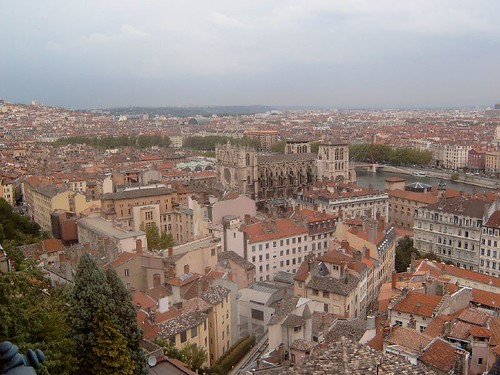
Not content with the largest museums,islands,office towers and malls, Saeed al-Gandhi, a Dubai businessman is planning to replicate Lyon. Naming rights for stadiums have long been one method of transforming symbolic ownership into a revenue stream. In this deal the city of Lyon has signed a £350m agreement allowing Dubai to reproduce an area of about 700 acres, roughly the size of the Latin Quarter of Paris, that will contain squares, restaurants, cafes and museums.

Monday, January 14, 2008

Using Twitter to Help Communities


Drawing upon his experience in the San Diego fires of 2007, Nate Ritter has authored a blog post about Using Twitter to Help Communities.

Thursday, December 20, 2007

Philips Design

Immersive technologies are reaching a tipping point where buzz words like convergence, ubiquitous computing, and web 2.0 are transforming social practices. How can designers make sense of these changes? A recent Philips Design probe reveals that,

Far from fading out, as some media reports indicate, Philips Design believes that there is serious attention being paid to virtual immersive spaces, like Second Life, as dialogue with virtual world residents uncovers what companies can achieve above and beyond public relations and branding activities

Urban Computing


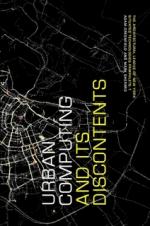
Adam Greenfield and Mark Shepard, co-authors of Situated Technologies Pamphlet 1: Urban Computing and Its Discontents, together with Eric Paulos of Intel Research, will consider the opportunities and dilemmas of ubiquitous computing for urban life in this panel discussion launching the series. The Situated Technologies Pamphlet Series, published by the Architectural League of New York and co-edited by Omar Khan, Trebor Scholz and Mark Shepard, explores the implications of ubiquitous computing for architecture and urbanism: How are our experiences of the city and the choices we make in it affected by mobile communications, pervasive media, ambient informatics, and other “situated” technologies? How will the ability to design increasingly responsive environments alter the ways we conceive of space? What do architects need to know about urban computing, and what do technologists need to know about cities? How are these issues themselves situated within larger social, cultural, environmental, and political concerns?
Thanks to Cindy Frewen Wuellner for the reference.

How to See

The book How to See, written in 1977 by George Nelson,has just been reisssued. One of the most important designers of the last century, George Nelson deployed his visual insights to understand urban form at a deeper level. Grady Clay's The Reading of the American City is another classic work from this era. Together, these volumes teach us how to understand the fluidity and change of the city in its own terms.

Wednesday, December 05, 2007

2008 Smart21 Communities

The
Intelligent Community Forum, a nonprofit think tank focused on the broadband economy, recently released its list of Smart21 communities. These communities, ranging from Dublin, Ohio to Hwa Seong Dong Tan, Korea have been chosen for their innovative approaches to deploy broadband technologies to improve their economies and quality of life.

Monday, December 03, 2007

Art and the Politics of Public Housing


In Art and the Politics of Public Housing, Jacqueline Leavitt makes the calls of Jane Addams and John Dewey to make art a compelling part of everyone's experience relevant today. Drawing on the examples of Pico Gardens, Aliso Village and Aliso Extension (aka Pico Aliso), three adjacent developments in the Boyle Heights community of Los Angeles, she explores the varied ways art can be deployed to provide a community with a way to reflect on the politics of public housing.

Thomas H. Hahn Docu-Images


Zenfolio | Thomas H. Hahn Docu-Images | China Urban Planning materials presents close to 4,000 photographs,
The galleries on display here belong to the category of documentary photography. The main subject area is China and that country's rather rapid transformation from a rural to an urban-centered society. Taken together, these galleries constitute a visual archive that for the most part is meant to capture and to preserve information (or "evidence of certain developments" perhaps).

Tuesday, November 13, 2007

Lego Education


Building Asia Brick By Brick is a playful exercise designed to think about urban form in a rapidly changing context. Different kinds of representations carry different kinds of affordances and overtones. The lego bricks allow a kind of embodied questioning and synthesis of old and new that isn't possible other representations.

Sunday, November 04, 2007

New York as a Songline


Bruce Chatwin's classic book, The Songlines, was among other things, a reflection on a communicative genre that performed the function of map, history, social identity, and personal voice. There are many ways of making sense of the urban form as communicative. Tobias Frere-Jones recently conducted a walking tour of New York focusing on typography. Although only 23 people took part in person, we can get some of the experience on the web from Michael Surtees'post.

Jim Naureckas offers another set of tours that explicitly reference the songline metaphor.

The blog Acejet170 also focuses on typography in a way that often features compelling ways of looking at the urban landscape. These resources mean that for me walks in my neighborhood become a mosaic of professionally and vernacularly produced signs that carry with them messages about the traces of their history that endure today.

Wikicity


The wikicity project is an effort of Assaf Biderman, Francesco Calabrese, Kirstian Kloeckl, Carlo Ratti, and Andrea Vaccari to create a projectso that a city performs as a real time control system. Rome is the current implementation, although a few additional implementations are planned.

Festival of Maps


If there are enough events, does the map eventually become the territory? The ongoing Festival of Maps in Chicago offers the work of more than 30 cultural and scientific institutions allowing us to see the urban world from a very broad range of perspectives, Mercator and otherwise.

Wednesday, October 31, 2007

Traveling Box


The contrast between the simplicity of the container and the deep transformation of urban form is remarkable. The Traveling Box ,an interdisciplinary conference being held November 8,9, and 10 at UC Santa Barbara, explores a wide range of the social, economic, and cultural impacts of containerization.

Tuesday, October 02, 2007

Norfolk's Light Rail


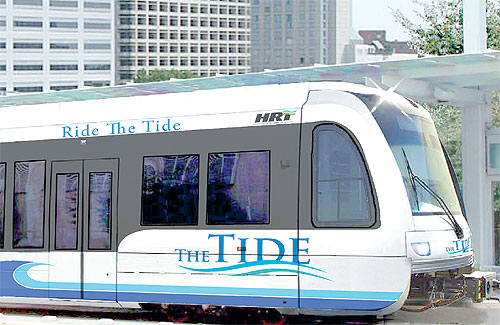
The Hampton Roads Pilot Online map of Norfolk's light rail uses Flash web technology to combine animation, maps, and passenger data, effectively illustrating the new light rail system that is now under development in Virginia. I especially like that people and buildings are included in the context of the technology.

Market, Mercado

Otavalo Market, Equador is one of many images they powerfully convey the connection among commerce, culture and food in the Flickr pool tagged Market, Mercado.

Saturday, September 29, 2007

Architectural Representations of the City in Science Fiction Cinema


Eric Mahleb's essay, Architectural Representations of the City in Science Fiction Cinema argues that despite 150 years of planning, little progress has been made in constructing cities that support improved living conditions. And today, we can't even do a very good job of imagining utopian cities.