Wednesday, April 18, 2007

Urban Markets


Over the past few decades, urban America has seen a resurgence in farmer's markets, which help tie a community together through frequent, informal interaction at the same time that some of the relations that support and sustain community become more visible and understood. Open air markets have a very long history and this web site offers a global set of resources.

Mapping French Identity


The Strangemaps blog offers many unusual ways of representing the world. What is more communicative than food? This image offers a graphic representation of local identity in France.

Wednesday, April 04, 2007

Space Syntax


"Space Syntax provides a unique, evidence based approach to the planning and design of buildings and cities. Our focus is the creation of environments which are socially and economically successful."

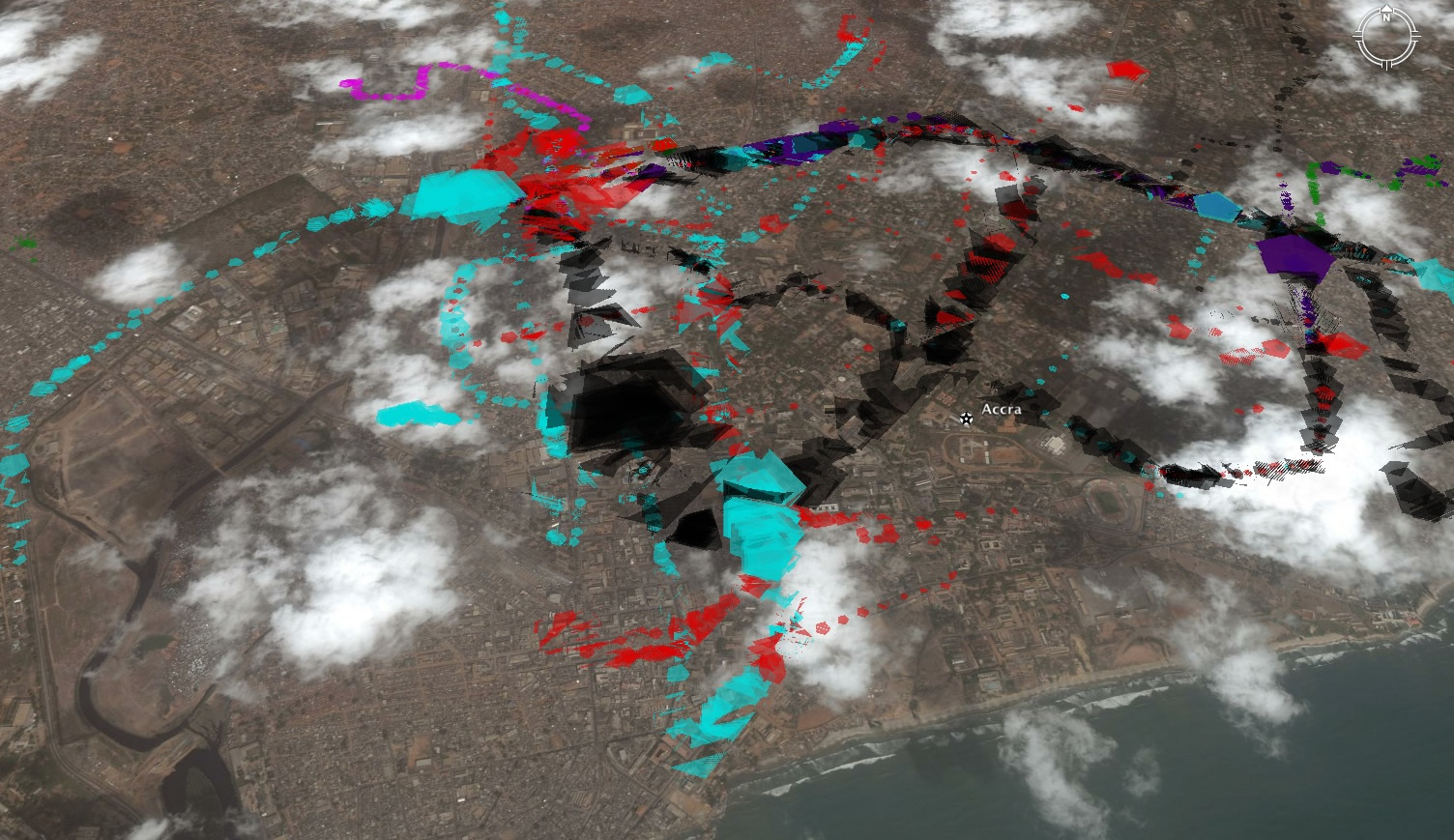
One recent project constructs routemaps of pedestrian paths in London in order to understand the opportunities for improving London's public realm.

Friday, March 30, 2007

Participatory Urbanism


The Internet is crawling with social networking projects like Facebook, Myspace, and countless others that are organized around common interests. As Cass Sunstein, Lawrence Lessig and others have pointed out, to the extent that these projects allow individuals to focus on only the things of interest to themsleves, these kinds of social sites may lead to a diminished sense of connection with a broader public.

Eric Paulos (Intel Research Berkeley), Ian Smith (Intel Research Seattle), and RJ Honicky (UC Berkeley) recently announced an initative aimed at reconnecting individuals to the public they inhabit: "In the spirit of Urban Computing, Participatory Urbanism is the open authoring, sharing, and remixing of new or existing urban technologies marked by, requiring, or involving participation, especially affording the opportunity for individual citizen participation, sharing, and voice. Participatory Urbanism builds upon a large body of related projects where citizens act as agents of change. There is a long history of such movements from grassroot neighborhood watch campaigns to political revolutions. It is not a disconnected personal phone application, a domestic networked appliance, a mobile route planning application, an office scheduling tool, or a social networking service."

Tuesday, March 27, 2007

What Makes a City Smart?


For Carol Coletta, CEO and president of the nonprofit group CEOS for Cities and host of Smart City Radio, one of the four most important drivers of innovation and competitiveness is the Connective City.

OOF


Edward Ruscha's painting works on many levels as an exploration of the relationships among representation and life. The painting plays with the impossibility of representing sound in visual terms, the elements that affect communication, the role of commercial art and vernacular culture, and the blurring of sign and image. And some days can be best captured by OOF.

All Grown Up


The blog Brand Avenue had a recent post that brought together a variety of analysts who ponder the lessons of the gentrification of the Williamsburg neighborhood of Brooklyn.

On the Street


This blog offers a quirky view on street life in Japan.

The City is Here for You to Use


Proponents and enthusiasts argue that no domain of human behavior will be untouched by this transformation, but relatively little thought has been given to specifically how these changes might unfold at the scale of the city. How will the advent of a truly ubiquitous computing change our urban places - both the way they’re built, and the way we live them? In this new talk, Everyware author Adam Greenfield tries to wrap his head around this dynamic set of conditions, to clarify what’s at stake and to offer some potential frameworks for building humane and livable cities in the age of ambient informatics.

Tuesday, March 06, 2007

Andres Duany Gave Quite a Talk


A speech given by Andres Duany in 2002 has motivated business, political, and civic leaders in Atlanta to develop a proposal to spend $1 billion over the next trwenty years to bring life back to Peachtree Street. The proposal would create a street car system, bike lanes and a string of parks to create a world-class corridor similar to Michigan Avenue in Chicago. The funds would come from a special tax district. It is wonderful to see this kind of transformative vision, but the success of this kind of project always depends upon public input and striking the right balance between the interests of developers and residents of the city as a whole.

Tuesday, February 27, 2007

Wooster Collective


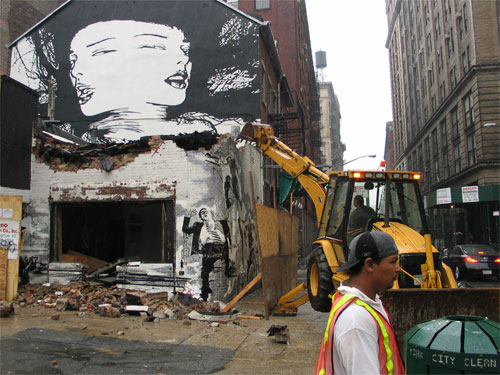
The Wooster Collective was founded in 2001 and is dedicated to showcasing and celebrating ephemeral art placed on streets in cities around the world.

Wednesday, February 21, 2007

Audio Architecture

Much of our aural landscape is carefully engineered by twenty two "audio architects" in Fort Mill, South Carolina. In this New Yorker article, David Owen describes how much Muzak has changed. Instead of bland "elevator music" Muzak now draws on more than 1.5 million songs, analyzes the "topology"--the cultural and temporal associations carried by tunes--to craft hundreds of disitinctive aural soundscapes.

Their efforts help distinguish the brand identity and shopping environment of Old Navy from the Gap. I am fascinated by the degree to which elaborate data collecting, design, and analytic techniques are used to create the environments we inhabit. These environments may be more enjoyable and diverse than older environments, but we have much less of an understanding, let alone the power to reshape, how and why these newer environments are constructed.

Monday, February 19, 2007

New City Life


Jan Gehl's earlier book, Life Between Buildings is one of the most sensitive explorations of the relationship between the built environment and vibrant social life. His new book, New City Life, has just been published.

B-Zone: Becoming Europe and Beyond


B-ZONE is a territorial research and collaborative art project on the transformation of the social and political geographies stretching from Southeast Europe (the Balkans) to Turkey and the Caucasus.


This project examines the role of three infrastructures--an oil pipeline, a highway, and a satellite telecommunication system--in the creation of identity.

Spaces Speak, Are You Listening?


This book, co-authored by Barry Blesser and Linda-Ruth Salter, integrates perspectives from a wide variety of disicplines to explore how the audible aspects of physical space contribute to the fabric of human culture.

Friday, February 16, 2007

Global South Mobility Library


This section of Youtube contains 76 video clips of problematic urban traffic patterns, providing a glimpse of a wide variety of urban spaces.

Tuesday, February 13, 2007

G-Econ Project at Yale University


This web site offers a dramatic representation of the concentration of economic activity at a national level.

Beyond Broadcast 2007

"On February 24th, MIT Comparative Media Studies will host a conference in collaboration with Harvard’s Berkman Center for Internet and Society and the Information Society Project at Yale Law School. The one-day event will be held at MIT, and is entitled “Beyond Broadcast: From Participatory Culture to Participatory Democracy.” It will bring together industry experts, academic leaders, and political activists for panel discussions and focused working groups.

Attendees will explore the means, the message, and the meaning of the post-midterm, pre-presidential YouTube moment. Broadcast media have long played a powerful role in shaping political culture and mediating citizen engagement in the democratic process, and the conference will examine how participatory culture is putting the tools of media creation and critique in the hands of citizens themselves."

Smart Space


There is a lot of buzz around the concept of creating a brand or identity for a city. Ideo is a design firm that has developed an innovative set of practices for developing a formal community vision. This activity stands in an uncertain relationship between public relations and urban planning and it seems like a fertile area for urban communication scholars to contribute to. This article discusses the Ideo experience in Kansas City.

Blandlands


A handful of dramatic spaces gain the bulk of attention from the media, the design community and academic researchers. It is also important to think about the landscape that serves as the foundation for most social interaction and urban communication. This web site is dedicated to the landscape that Frederic Jameson has termed "junkspace."